Quick answer
An office clearance usually involves removing furniture, paperwork, IT items and general waste, often after a tenancy ends or during a refit. Make sure confidential files are handled securely and electrical items are listed in advance.
What an office clearance usually includes
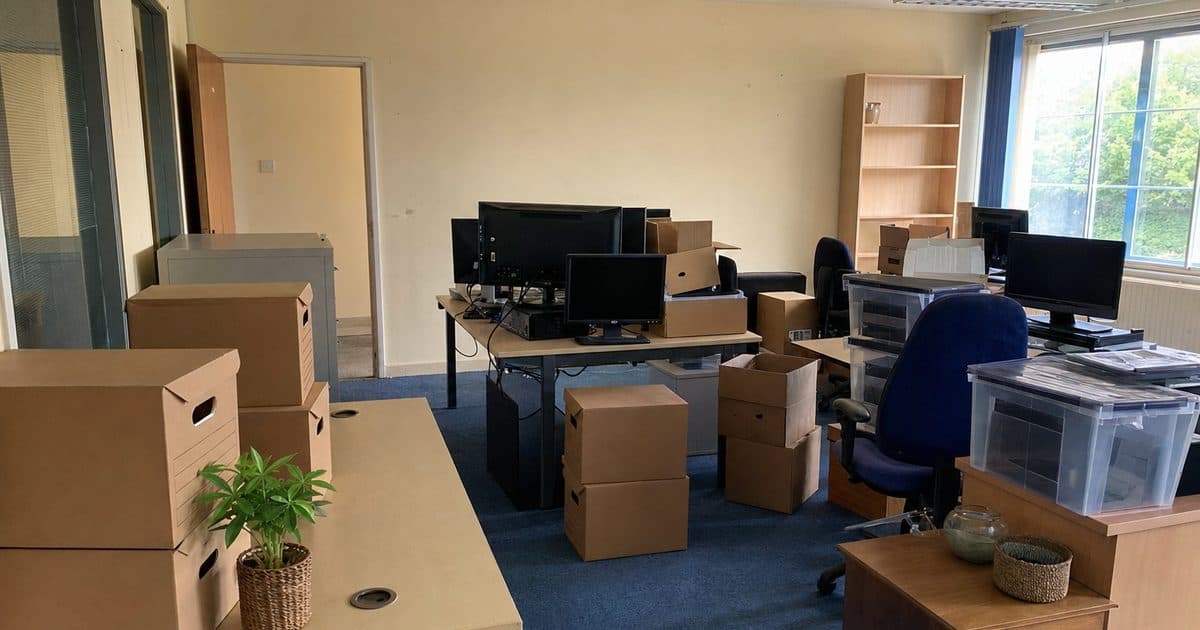
An office clearance in Trowbridge can be as simple as removing a few surplus desks or as involved as clearing an entire workplace at the end of a lease. Most businesses need a mix of furniture removal, waste collection and careful sorting so useful items are separated from general rubbish.
Common items include desks, task chairs, filing cabinets, meeting tables, shelving, monitors, printers, cables, stationery, archive boxes and kitchen items. Some offices also have broken fixtures, old display units or storage from a long-term fit-out that needs to go.
If your premises contain large amounts of mixed waste, it may help to pair an office clearance with Commercial Waste Removal. If you are dealing with old monitors, desktop computers or other electrical items, E Waste Disposal is often the better route for those items.
How to prepare before the team arrives
A little preparation makes the clearance smoother and can save time on the day. Start by walking through the space and deciding what stays, what goes and what needs to be checked by a manager before removal.
If you are in a shared building or managed office, let the landlord or managing agent know the date and the access plan. That helps avoid delays with lifts, loading bays, key collection or parking in central Trowbridge.
Make a simple room-by-room list
A short list for each room is usually enough. Write down items that must be removed, items that will stay, and anything that needs special handling such as locked cabinets, server equipment or fragile display units.
- Mark items that are staying with coloured tape or labels.
- Separate personal belongings from office equipment.
- Keep archive files and confidential documents in a safe place.
- Tell the clearance team about any heavy or awkward items in advance.
- Check whether anything needs dismantling before removal.
Plan access and timing
Office clearances are usually easier when the space is quiet and clear of staff. If possible, schedule the work for a time when fewer people are present, especially if drawers, cupboards and storage rooms need to be checked.
It also helps to confirm where vehicles can park and whether there are any restrictions for loading. In some cases, businesses choose to empty the main office first and then deal with storage areas, kitchens or meeting rooms separately.
What happens on the day
On the day, the team will normally review the items to be removed, confirm access and then begin loading. Good communication at this stage keeps the job efficient, especially if there are items that need to be set aside or moved in a particular order.
For larger clearances, it is common to start with bulk furniture and then move on to boxed items, paperwork and loose office contents. If the office contains unwanted furniture only, Furniture Removal may be enough. If the space has mixed waste as well, a fuller clearance is usually more practical.
| Item type | Typical approach |
|---|---|
| Desks and chairs | Removed as bulk furniture, sometimes dismantled first |
| Paperwork | Sorted separately, with confidential files set aside |
| IT equipment | Listed in advance and handled carefully |
| General office waste | Loaded with other mixed waste for disposal |
After the main items are removed, a final sweep of cupboards, under-desk areas and storage rooms is usually a good idea. That helps avoid leaving behind chargers, adapters, old stationery or personal items that were missed during the first check.
Data security and IT equipment
Offices often hold sensitive information in paper files, laptops, desktop computers, phones and removable drives. Before a clearance begins, make sure anything containing private data is identified and handled separately.
Paper records should be reviewed before removal so confidential information is not mixed with general waste. Where possible, keep files in a secure area until they can be shredded, archived or collected using a suitable disposal route.
Electrical and electronic items
IT equipment should be listed before the clearance so the team knows what is being removed. This includes monitors, printers, photocopiers, phones, routers, keyboards, cables and other electrical items that should not be treated like ordinary rubbish.
If you are clearing old servers, office computers or a stock of outdated devices, use a planned approach rather than leaving them in with general waste. That makes sorting easier and helps the job run more smoothly.
Common items office clearances cover
Every office is different, but many clearances in Trowbridge involve a familiar mix of items. Knowing what is usually included can help you prepare a better list and avoid last-minute confusion.
The items below are commonly removed during an office clearance:
- Desks, chairs and meeting furniture.
- Cabinets, cupboards and shelving.
- Computer equipment, monitors and cables.
- Paper files, archive boxes and stationery.
- Kitchen items, small appliances and break room contents.
- General rubbish from drawers, storage rooms and shared spaces.
If your business is also clearing stock, display items or unwanted fixtures, a related service such as Retail Clearance may be useful for shop or showroom premises. For larger sites with mixed heavy waste, Industrial Waste may be a better fit.